Scale Only When EPC Exceeds CPC: 7/30/90 Playbook for Affiliates
EPC, or earnings per click, is total commissions divided by total clicks over a set window. The decision rule that matters most: if EPC exceeds your cost per click (CPC), that traffic is profitable to scale; if it doesn’t, stop feeding it money. But raw EPC lies if you let it. You need net EPC, calculated after refunds and reversals, and you need it measured across the right cohort window before you trust the number enough to act on it.
Table of Contents
What EPC Affiliate Marketing Metrics Actually Tell You
EPC works as a screening tool, not a prophecy. Affiliates use it to rank offers and creatives before committing traffic, since a landing page pulling $45 EPC deserves more budget than one stuck at $12. Advertisers watch the same number from the other side, using it to spot which partners send buyers instead of tire kickers.
The trap is treating a network’s published EPC as a promise about your own results. That number reflects someone else’s traffic mix, geo split, and creative quality, not yours. A network EPC figure is a screening signal, not a forecast for the clicks you’re about to send.
Common misreads that trip up newer affiliates:
Calculating EPC: Formula and Real Numbers
The formula is simple: EPC = total commissions ÷ total clicks, measured over a defined period. The complexity shows up in commission type, not math.
Net EPC matters more than gross. If three of those CPA signups later get reversed for fraud or chargebacks, commission drops to $560, and net EPC falls to $1.12.
Reading EPC Reports Without Getting Fooled
Networks don’t all report EPC the same way, and that inconsistency costs affiliates money when they compare offers side by side.
Window length changes what the number tells you:
Pro Tip: Don’t trust any EPC calculated on fewer than a few hundred clicks. A 20-click sample can show a wild EPC purely from one lucky conversion, and that number will collapse the moment volume grows.
Cohort-based EPC tracking at 7, 30, and 90 days also helps you catch seasonality or a reversal leak before it drains a month of margin.
What Actually Moves Your EPC Up or Down
EPC isn’t one lever, it’s the output of several stacked together, and untangling them tells you where to spend your fix-it time.
Tactics That Reliably Raise Net EPC
Improving EPC is mostly disciplined iteration, not one clever trick.
Pro Tip: Tracking hygiene, meaning clean click filtering and automated reversal sync, often improves reported EPC more than any new landing page ever will.
EPC Minus CPC: The Only Math That Decides Scale
Margin per click is EPC minus CPC. That single subtraction is the real go/no-go decision, and it’s worth internalizing before you touch ad spend.
Offer B looks attractive on EPC alone but leaves almost no room for a bad week or a reversal spike. Offer A has a lower EPC but a fatter cushion. Lifetime value and refund risk can flip either of these; a RevShare offer with strong D60 retention might justify Offer B’s thin margin, while a CPA offer with high chargeback rates can turn Offer A negative fast.

Building a Tracking Setup You Can Trust
EPC is only as good as the click data underneath it. Start by defining a unique validated click, meaning one deduplicated, bot-filtered click tied to a real visitor, and make sure refund and reversal postbacks sync automatically instead of showing up in a manual report three weeks later.
From there:
Platforms built for iGaming affiliates typically include real-time tracking, multiple commission options, and dependable payout schedules in their dashboards, creating infrastructure that makes net EPC actionable rather than uncertain.
A Working Playbook for EPC-Driven Decisions
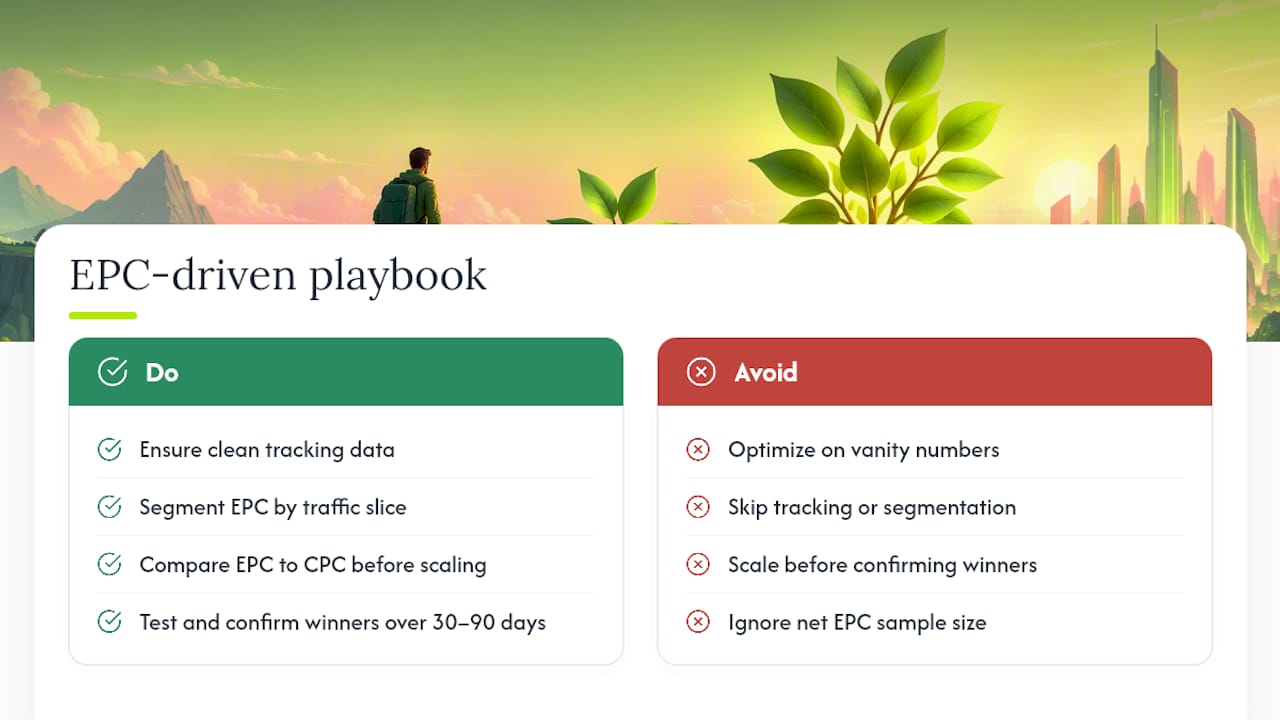
Three things separate affiliates who scale profitably from those who chase vanity numbers: clean tracking data, EPC segmented by traffic slice, and a hard rule to compare EPC against CPC before spending another dollar. Skip any of the three and you’re optimizing on noise.
The pattern shows up constantly in affiliate marketing strategies across niches, but it’s especially unforgiving in high EPC programs like iGaming, where reversal rates and player lifetime value can swing net numbers hard in either direction. A quick checklist beats a long strategy document: test one variable at a time, measure net EPC on a real sample size, then scale only the winners you’ve confirmed hold up over a 30 to 90 day window.
How Seven Affiliates Helps You Act on EPC Data
Once you know your net EPC and your margin per click, the next problem is infrastructure. You need a program that reports numbers you can actually trust and pays out on schedule so your cash flow math stays honest.

Seven Affiliates runs an iGaming affiliate program built around real-time tracking, so you can catch a slipping EPC before it costs you a week of ad spend instead of finding out at month’s end. Commission structures include CPA, revenue share at 35%, and hybrid models, giving you flexibility to match whichever structure fits your traffic and your appetite for short-term versus lifetime EPC. Fast, reliable payments and personalized account support round out the setup, which matters when you’re trying to compute clean net EPC instead of chasing down a missed reversal report. If you’re ready to see how your traffic performs against real commission data, explore the Seven Affiliates program and start tracking your own numbers.
Sources
FAQ
What Does EPC Stand for in Marketing?
EPC stands for earnings per click, the average commission generated by every click sent to an offer. It’s calculated as total commissions divided by total clicks over a chosen reporting window, and affiliates use it to compare offers before committing traffic.
What Is EPC in Cuelinks?
Cuelinks and similar affiliate networks report EPC the same way most networks do: total commission earned divided by total clicks, usually shown for a rolling period like 7 or 30 days. Always check whether the platform is quoting per-click or per-100-click figures before comparing it against another program.
What Is the Highest Paid Affiliate Program?
There’s no single universal answer, since the highest-paying program depends on niche, commission model, and your traffic’s conversion behavior. High EPC programs tend to cluster in verticals with high customer value, such as iGaming, finance, and software subscriptions, where revenue share and hybrid models like the one Seven Affiliates offers can produce stronger long-term EPC than flat one-time payouts.
How Do I Know if an Offer Is Actually Profitable?
Subtract your cost per click from the offer’s net EPC. If the result is positive after accounting for refunds and reversals, the offer is worth scaling; if it’s negative or razor thin, pause it or fix the funnel first.
How Many Clicks Do I Need Before I Trust an EPC Number?
There’s no fixed threshold, but a few hundred clicks is a reasonable floor before treating EPC as stable rather than lucky. Shorter windows like 7-day EPC are useful for quick tuning, while 30- and 90-day windows give a far more reliable picture, especially for revenue share offers where player value builds slowly.
Made with help from BabyLoveGrowth